Application
Ballistics at high speed
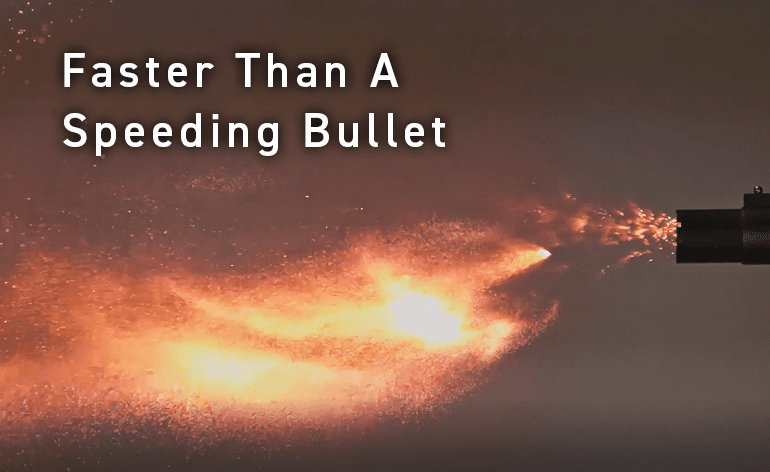
Projectiles, armor, fragmentation and proving ground events with nanosecond exposures.
The challenge
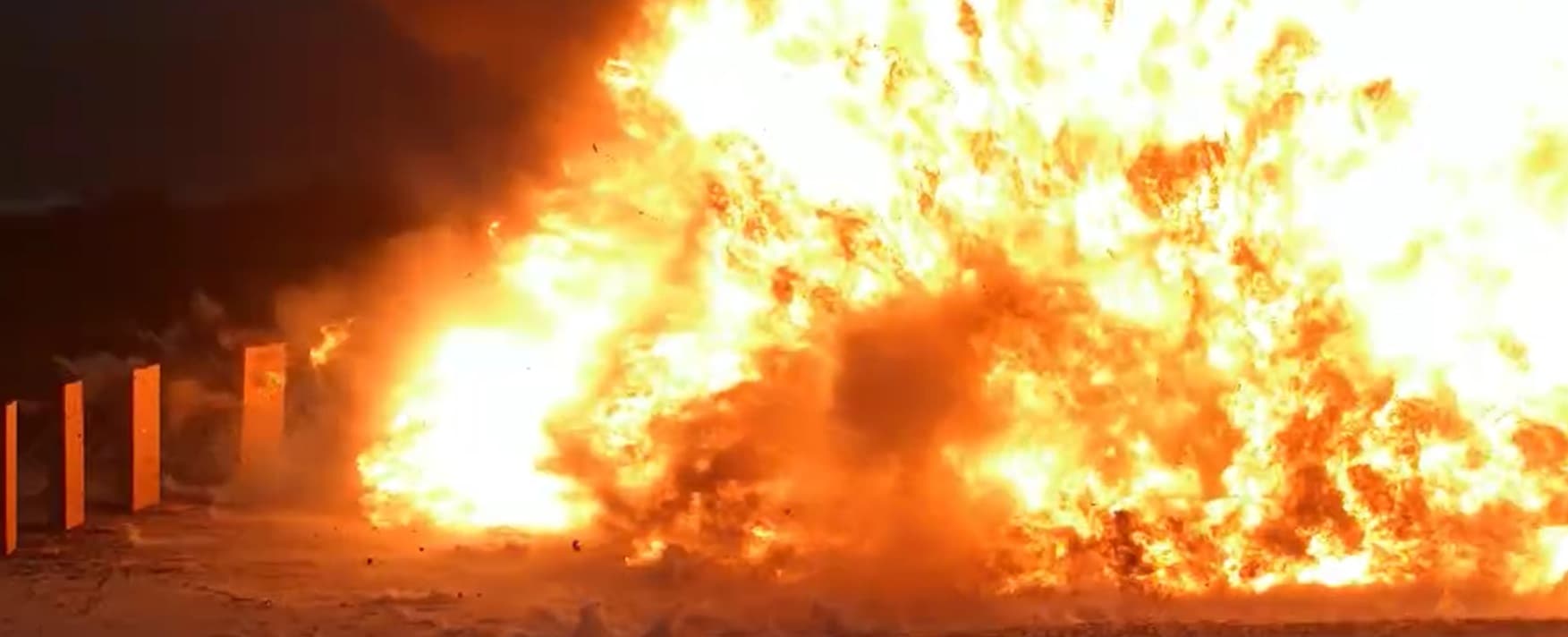
A projectile crosses the frame in microseconds, and an impact on armor produces fragments, intense light and vibration. Measuring velocity, yaw, penetration and fragmentation takes frame rates of hundreds of thousands of frames per second, very short exposures and a trigger synchronized with the event.
What the camera needs to deliver
744,670 fps
in FAST mode on the TMX 7510
Enough frame rate to capture dozens of frames of a projectile in flight.
ns
nanosecond exposures
They freeze the projectile without motion blur.
BSI
back side illuminated sensor
Sensitivity to work with pulsed lighting and short exposures.
Recommended cameras
TMX 7510
- 76,000 fps at 1280 x 800
- 744,670 fps in FAST mode
- 512 GB of RAM
Highest frame rate in the line, with a BSI sensor.
T3610
- 38,040 fps at 1280 x 800
- 525,000 maximum fps
- 256 GB of RAM
Ultrahigh-speed in a compact body, for protective housings.
KT1610
- 15,640 fps at 1280 x 832
- 916,660 maximum fps
- BSI 1 Mpx sensor
Up to 916,660 fps in a small body, for field use.
Case studies and featured research
Videos
Frequently asked questions
What frame rate do I need for a 900 m/s projectile?
It depends on the field of view. For a 30 cm path and 20 useful frames, it is about 60,000 fps. The Academy calculator does the math.
Are there export restrictions?
Cameras above certain frame rates are subject to US export rules. DVPRO advises on the documentation and timelines.